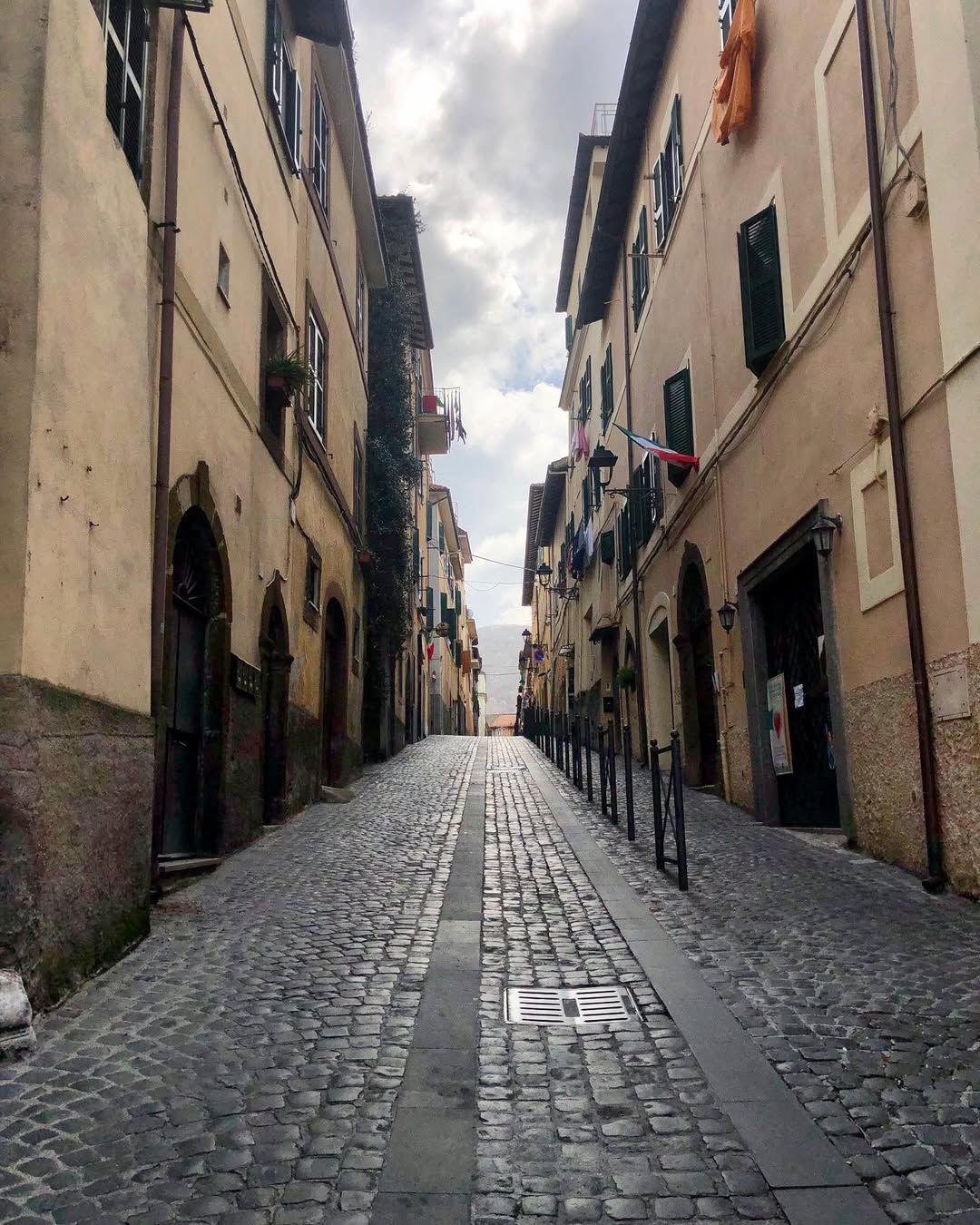
Above Monte Porzio Catone, where there is now an archaeological park in the woods, in the Middle Ages there was a city that counted for more in Rome than most. From that hill came men who for over a century chose the popes, or were popes themselves. They were the Counts of Tusculum.
Who were the Counts of Tusculum?
They were a family of the Roman aristocracy. Their earliest known ancestor is Theophylact, recorded in 826 as nomenclator, an official of the papal court. Probably one of his descendants, Theophylact I, effectively ruled Rome from about 904 to 922, though the exact links between the generations are debated.
The first man explicitly recorded as Count of Tusculum is Gregory I, senator of the Romans in 986 and naval prefect in 999. The title of count, scholars explain, may come more from the office of count of the Lateran Palace than from real power over the city of Tusculum.
The papacy of the nobles
In the tenth century the Roman nobility decided who sat on the throne of Peter. It was Alberic II, who ruled Rome from 932 to 954, who organised what historians call the “papacy of the nobles”: a period in which the Roman families dominated the city’s politics and the choice of popes.
The family’s popes
The list of popes linked to the family includes, according to Wikipedia, John XI (931-935), John XII (955-964), Benedict VII (974-983, whose kinship is debated), Benedict VIII (1012-1024), John XIX (1024-1032) and Benedict IX (1032-1048). To these is added Benedict X, considered an antipope (1058-1059).
Benedict VIII and the Crescentii
For almost forty years, between 974 and 1012, the Tusculans were pushed aside by the Crescentii, another Roman family, with the single exception of Gregory I’s revolt in 1001-1002. With Benedict VIII, pope from 1012 to 1024, the family returned to power: it reduced the Crescentii’s control and allied itself with Emperor Henry II.
Benedict IX, the most controversial pope
The most famous, and the most controversial, is Benedict IX. Born around 1012, son of Count Alberic III and nephew of Benedict VIII and John XIX, he was elected in October 1032, according to the sources after his father had bribed the Romans.
- His age. Most sources say he was about twenty. Others, based on one chronicler, say 11 or 12, but the reference entry calls this account unproven.
- Expulsion. He was driven out by a revolt and Sylvester III was elected in his place. The dates differ, between September 1044 and January 1045.
- Return and sale. He came back to Rome in 1045 and agreed to resign in favour of his godfather, John Gratian, who became Gregory VI, in return for repayment of the costs of his election. Gregory VI is described as the man who bought the papacy.
- Sutri. In 1046 the synod of Sutri, called by Emperor Henry III, deposed Benedict IX, Sylvester III and Gregory VI. Clement II was elected.
- The last years. Benedict IX held the Lateran for the last time between November 1047 and July 1048, then was driven out by German troops. He died around December 1055 or January 1056.
The charges of misconduct against Benedict IX come from hostile writers, such as Bishop Benno and Peter Damian, and according to some scholars they were shaped by politics. He was buried in the nearby abbey of Grottaferrata: its abbot, Saint Bartholomew, said he had repented.
How it ended
From 1062 the counts sided with the emperors against the reforming papacy, and after the council of Sutri and the reforms of papal elections the influence of the Roman nobles declined. Under Ptolemy II (1126-1153) the family reached the height of its power along the Via Appia and the Via Latina.
In 1167, at the battle of Monte Porzio, Count Raino, the emperor’s ally against the Commune of Rome, won. The Tusculans, however, would not let him back into the city, and he sold his share to Pope Alexander III, who already owned the other half. It was the end of the family’s rule. In 1191 the Commune of Rome, with the permission of Emperor Henry VI, destroyed Tusculum, which was never rebuilt.
What is left today
On the acropolis of Tusculum you can still see the remains of the Counts’ medieval fortress. The relationship between the hill and the city is told in Monte Porzio Catone and Rome: two thousand years of history.
In short
- Who: the Counts of Tusculum, a family of the Roman aristocracy, earliest known ancestor Theophylact (826).
- Popes: Benedict VIII (1012-1024), John XIX (1024-1032), Benedict IX (1032-1048, with interruptions); others in a longer list.
- The best known case: Benedict IX, who in 1045 handed the papacy to his godfather Gregory VI; buried at Grottaferrata.
- The end: battle of Monte Porzio (1167), destruction of Tusculum (1191).
- To see: the Tusculum archaeological park, above Monte Porzio Catone.
Practical info
- Place
- Parco Archeologico Culturale di Tuscolo
- Map
- Open in Google Maps
- Opening times and visits
- Tusculum Archaeological Park, official site: times and bookings can change, check there before you go.
Sources
- Wikipedia, Counts of Tusculum
- Wikipedia, Pope Benedict IX
- Holy See, Benedict VIII
- Italian Ministry of Culture, Parco archeologico culturale di Tuscolo
Written by Osteria Il Tinello, Monte Porzio Catone. Last updated: 5 November 2026. Spotted a mistake? Message us on WhatsApp.