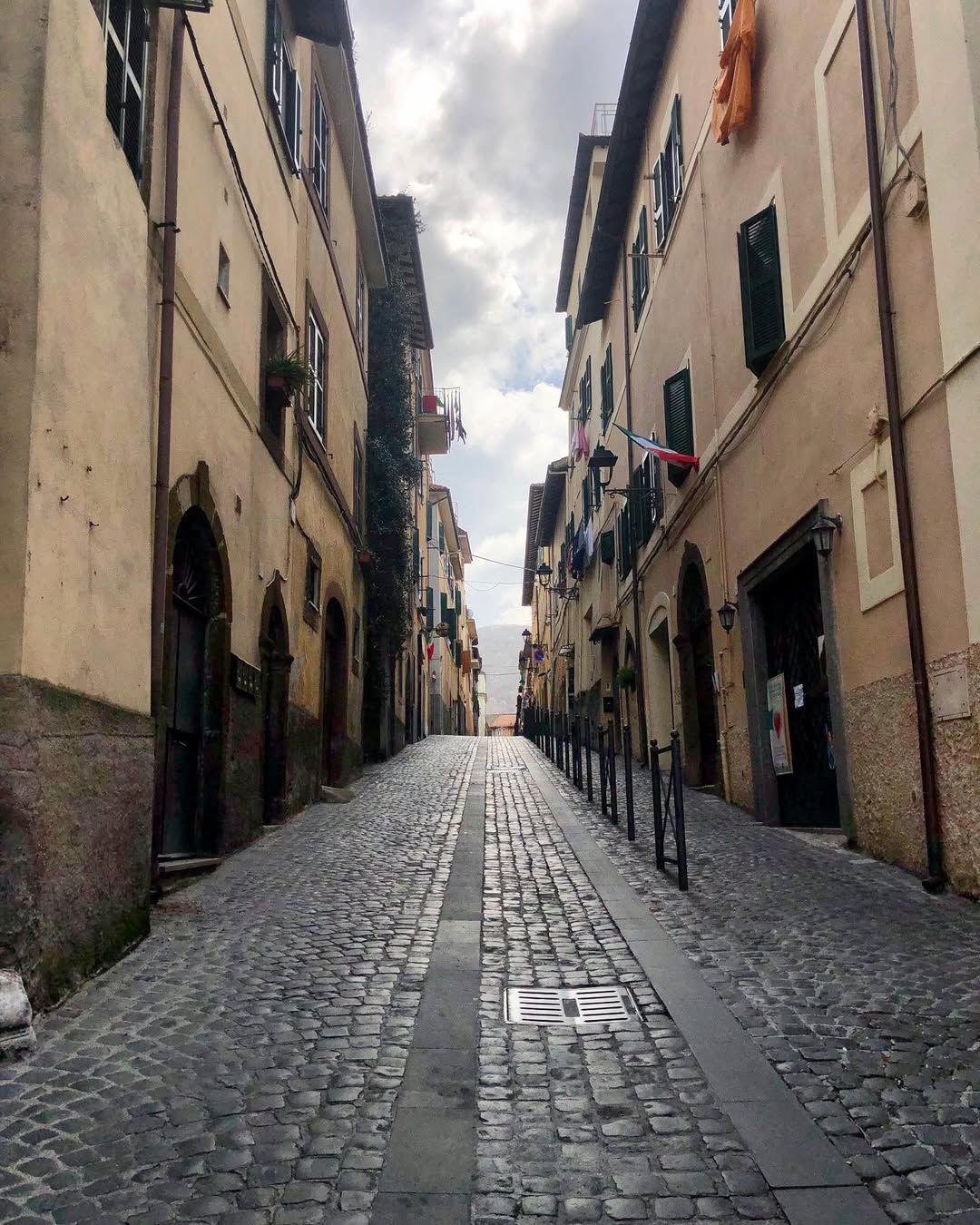
On the road between Monte Porzio and Frascati you can see some domes. They are not another villa: this is the Rome Astronomical Observatory, one of the institutes of Italy’s National Institute for Astrophysics, which has its main site right here. On the same hills where, according to tradition, the Gregorian calendar was born in 1582, people now study galaxies and cosmology.
Why is the Rome Observatory at Monte Porzio Catone?
The Rome Astronomical Observatory was founded in 1938 at Villa Mellini, on Monte Mario. In the same years a new site was planned outside the city, at Monte Porzio Catone, to house a large refracting telescope. The Second World War stopped the project.
- 1948: the Monte Porzio building is assigned to the Observatory.
- 1988: researchers start working permanently at Monte Porzio Catone, which becomes the main research site.
- 2002: with the creation of INAF, the Observatory, until then an independent institute, becomes part of the new body.
The Astronomical and Copernican Museum and the Solar Tower remained on Monte Mario.
What is at the Monte Porzio site today?
The main building has three floors and a modern library under the largest dome. Around it are a guesthouse, laboratories and spaces for the public, about 8,750 square metres of buildings in grounds of about 7.5 hectares.
Research here covers galaxies and cosmology, stars and the interstellar medium, the Solar System, relativistic astrophysics and instrumentation. The staff also teach courses and seminars at Rome’s universities.
Can you visit?
Yes, on specific occasions. The Observatory has spaces designed for the public and for schools:
- AstroLAB, an interactive astronomy lab;
- LightLAB, another lab for public outreach;
- the Monte Porzio Telescope, used for evenings observing the Moon and the planets.
Evenings and visits are booked in advance and change through the year: dates and details are on the Observatory’s official website.
What is the Roman villa in the grounds?
Among the domes are the remains of a Roman villa from the imperial age, attributed to Matidia, niece of the emperor Trajan and mother in law of Hadrian. On some evenings open to the public, the Latium Vetus archaeological group has guided visitors through the ruins. It is an image that sums up these hills well: you look at the sky from where, two thousand years ago, the Romans had their villas, as at the Barco Borghese and at Tusculum.
In short
- Where: Via Frascati 33, Monte Porzio Catone, main site of INAF, Rome Astronomical Observatory.
- History: founded in 1938 on Monte Mario; Monte Porzio site assigned in 1948, in use since 1988; part of INAF since 2002.
- For the public: AstroLAB, LightLAB and telescope evenings, booked in advance.
- In the grounds: remains of a Roman villa attributed to Matidia.
- Read next: curious facts about Monte Porzio Catone, the history of the town.
Practical info
- Place
- INAF, Osservatorio Astronomico di Roma
- Address
- Via Frascati 33, 00078 Monte Porzio Catone (RM)
- Map
- Open in Google Maps
- Opening times and visits
- INAF, Rome Astronomical Observatory, official site: times and bookings can change, check there before you go.
Sources
- Italian Ministry of Culture, AstroLAB at INAF, Rome Astronomical Observatory
- Wikipedia, Rome Observatory
- Media INAF, An evening under the stars at Monte Porzio Catone (2013)
Written by Osteria Il Tinello, Monte Porzio Catone. Last updated: 5 November 2026. Spotted a mistake? Message us on WhatsApp.