If you ask “what wine do they make in Monte Porzio?” the answer is already in your glass: Frascati. The name belongs to the next town along, but the vineyards are ours too. The whole of Monte Porzio Catone lies inside the Frascati area, and several wineries on our hills produce it.
Where does Frascati wine come from?
The production area covers the whole of Frascati, Grottaferrata and Monte Porzio Catone, and part of Rome and Monte Compatri. That is about 8,300 hectares on the northern slopes of the Alban Hills, between roughly 70 and 500 metres above sea level, with vineyards facing mostly west and north west, towards Rome.
The soil is what makes the difference. These hills are what remains of the Latial Volcano, which became active about 600,000 years ago, and the vines grow mostly on tuff and pozzolana, which locals call “terrinelle”. These volcanic soils drain well; the harder lava rock is rarely farmed.
Which grapes is it made from?
Frascati is a white wine. Under the production rules:
- at least 70% must come from Malvasia bianca di Candia and Malvasia del Lazio, also called Malvasia puntinata;
- up to 30% can come from Bellone, Bombino bianco, Greco bianco, Trebbiano toscano and Trebbiano giallo;
- within that 30%, a small share of other white grapes suited to Lazio is allowed.
Frascati, Frascati Superiore and Cannellino: what is the difference?
The Frascati DOC was recognised by decree on 3 March 1966, among the first appellations in Italy. In 2011 two styles that used to sit inside the DOC became appellations in their own right, with the highest guarantee, DOCG:
- Frascati Superiore DOCG, the dry white made under stricter rules;
- Cannellino di Frascati DOCG, the sweet white. The grapes are picked late and can be partly dried; it must be made and bottled inside the production area.
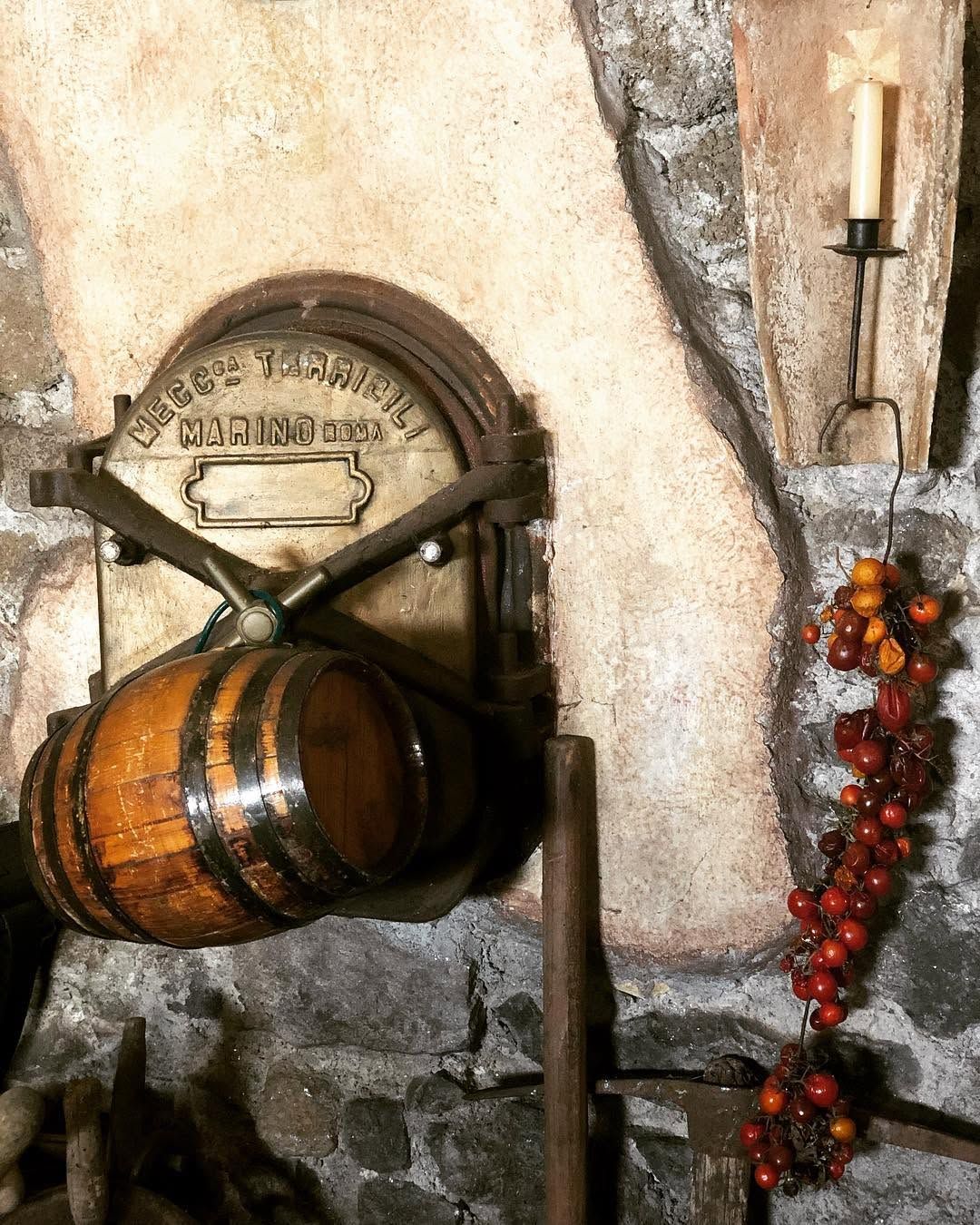
Where the name “Cannellino” comes from is not documented. The most repeated explanation is that the wine came out of the cannella, the tap of the barrel. Sources say that an agricultural survey from 1833 already describes a sweet wine made in the Castelli from dried grapes, much in demand among Rome’s innkeepers.
How long has wine been made on these hills?
Since before imperial Rome. Ancient sources tie wine to Tusculum, the city on the hill above the town:
- Cato the Elder, born at Tusculum in 234 BC into a family of landowners, wrote the first Roman rules on growing vines and making wine in his De agri cultura. His name is still part of the town’s name.
- Varro mentions the Tusculan Vinalia, the festivals of the new wine: by law, the wine could not be taken to Rome before the celebrations were over.
- After the fall of the empire the vineyards did not disappear: medieval documents, including monastery archives, still describe them spreading below Frascati.
Closer to our time, in 1949 eighteen producers founded a consortium to protect the wine’s name, the first step towards the DOC seventeen years later.
Where can you discover the wine in Monte Porzio?
The town has a Wine Museum, opened in 2024 in the old railway station: it tells the story of the vineyard, the harvest and the cellar, and has a tasting room. See the museum’s website for opening times. Many wineries in the area offer visits and tastings: it is best to contact them directly.
In short
- The wine of Monte Porzio Catone: Frascati, white.
- Area: all of Monte Porzio Catone, Frascati and Grottaferrata, part of Rome and Monte Compatri; about 8,300 hectares of volcanic soil.
- Grapes: at least 70% Malvasia di Candia and Malvasia del Lazio.
- Appellations: Frascati DOC since 1966; Frascati Superiore DOCG and Cannellino di Frascati DOCG (sweet) since 2011.
- Read next: the ruins of Tusculum, how to get here from Rome.
Sources
- Wikipedia, Frascati (vino)
- Wikipedia, Cannellino di Frascati
- ARSIAL, production rules of the Frascati DOC
- Museo del Vino di Monte Porzio Catone, official site
Written by Osteria Il Tinello, Monte Porzio Catone. Last updated: 4 November 2026. Spotted a mistake? Message us on WhatsApp.